Nobody Should Ever Feel Like a Spare Part
There are certain feelings we all recognise instantly.
Walking into a room full of strangers is one of them.
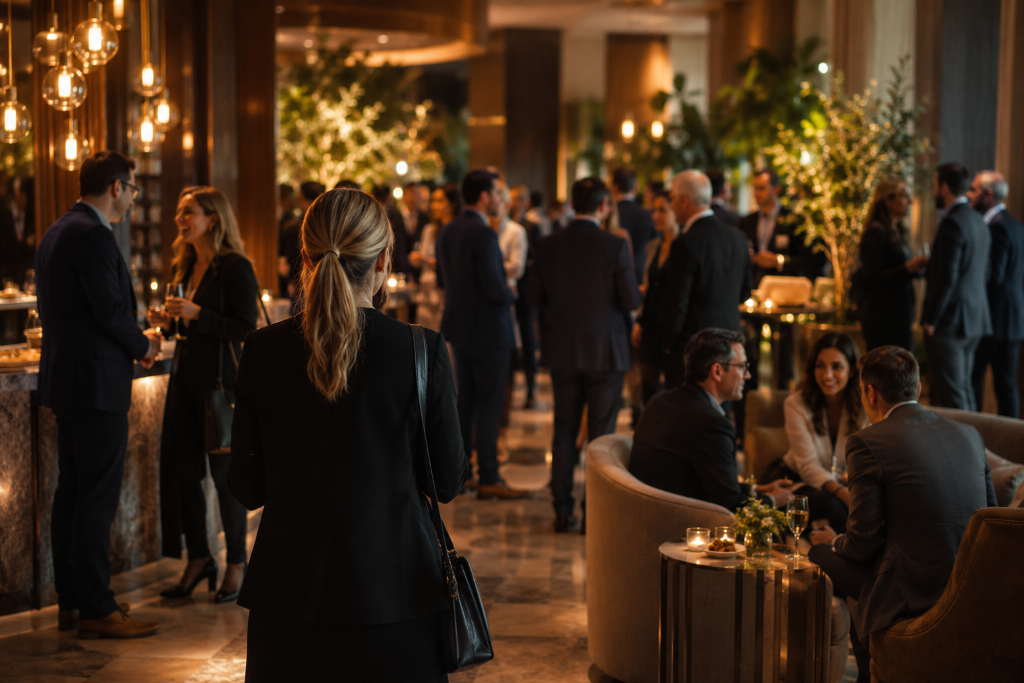
Perhaps you've arrived a few minutes early. Someone welcomes you with a smile, hands you a name badge and points you towards the drinks reception. You thank them, take a glass from the bar and walk into the room.
Almost immediately you notice that everyone else seems to have found their place.
Small groups are already gathered together, laughter drifts across the room and conversations are flowing effortlessly. Some people are catching up with old colleagues, others are introducing clients or talking about projects they're working on. From the outside, it looks as though everyone belongs there.
Except, for a moment, you.
So you hesitate.
You wonder whether to interrupt a conversation or wait for someone to finish. You glance around the room looking for a familiar face, even though you already know there probably isn't one. Almost instinctively, you reach for your phone. You don't really have anything to check, but it gives your hands something to do while you decide what happens next. Another sip of your drink. Another glance around the room. Another few seconds hoping an opportunity to join in presents itself.
It rarely lasts very long.
But it feels much longer.
The interesting thing is that almost everyone has experienced that moment at some point, regardless of how confident they appear. CEOs feel it. Graduates feel it. Entrepreneurs, directors and industry leaders all know what it's like to walk into a room where everyone else seems to know each other.
Yet we often assume that's simply part of attending an event.
I don't think it should be.
One of the biggest misconceptions about event planning is that success begins when the first speaker steps onto the stage or the first course is served. In reality, an event begins the moment the first guest walks through the door. Those first few minutes quietly shape everything that follows because they're the moments when people decide whether they feel comfortable enough to be themselves or whether they'll spend the evening standing on the edge of the room, waiting for the right moment to join in.
The difference is rarely confidence.
More often than not, it's design.
Not the design of the stage or the lighting, but the design of the experience itself.
Over the years, one of the things we've learnt is that people shouldn't have to work hard to feel comfortable. A well-designed event gently removes the awkwardness before guests even realise it was there. It creates opportunities for conversations to happen naturally instead of expecting people to force them. It gives guests permission to relax because someone else has already thought about what they might need.
That starts long before the event itself.
Long before the menus have been chosen or the production schedule has been signed off, we're thinking about the people in the room. Who's attending? Why are they coming? Who would genuinely benefit from meeting each other? Where might unexpected connections happen?
The most valuable introductions are rarely accidental.
They're intentional.
There's a world of difference between saying, "John, this is Sarah," and saying, "John, Sarah has recently expanded into renewable energy and I know you've spent the last few years working with businesses in that sector. I had a feeling you'd enjoy meeting each other."
One introduces two people.
The other starts a conversation.
Those moments might seem small, but they change the entire tone of an event. Suddenly guests don't feel as though they're trying to find their place in the room. They feel as though someone has already helped them find it.
We also spend a surprising amount of time watching the people nobody else is watching.
Every event has them.
The guest who arrives alone.
The graduate attending their first networking evening.
The client whose colleague cancelled at the last minute.
The speaker who's just stepped off stage and is standing quietly with a coffee while everyone assumes someone else will speak to them.
Those people are never invisible.
At least, they shouldn't be.
Sometimes all they need is a thoughtful introduction. Sometimes it's an invitation into a conversation that's already happening. Sometimes it's simply someone asking how they're finding the evening.
Those moments don't require a huge budget.
They require attention.
The room itself plays its part too. We often talk about venues in terms of capacity, location or how impressive they look in photographs, but spaces quietly influence behaviour in ways we rarely notice. A room full of rows of chairs encourages people to sit and listen. Comfortable lounge seating encourages conversations to linger. A thoughtfully positioned drinks station naturally brings people together. Interactive food stations, shared tables or live experiences give strangers something to talk about before they even ask each other what they do for a living.
The best networking rarely feels like networking.
It feels like people enjoying themselves.
That's why shared experiences are so powerful. A chef preparing dishes in front of guests, a wine tasting, a cocktail masterclass or an interactive activity all give people something to experience together. Suddenly the pressure of finding the perfect opening line disappears because the event has already provided one.
Conversation becomes effortless.
Perhaps that's the difference between organising an event and hosting one.
A well-organised event runs on time.
A well-hosted event makes people feel as though they belong.
Hosting isn't about standing behind a registration desk with a guest list. It's about reading the room. It's noticing when someone is beginning to drift towards the edge of the space, recognising when a conversation has naturally come to an end or quietly introducing two people who would never have met without a little encouragement.
Most guests never notice any of this happening.
That's exactly the point.
The very best hospitality is almost invisible. By the end of the evening, people simply remember that they enjoyed themselves. They remember conversations that felt effortless, introductions that turned into opportunities and an atmosphere that somehow felt relaxed from the moment they arrived.
They don't remember why.
And perhaps they shouldn't.
Because creating an exceptional event has never really been about the venue, the flowers, the lighting or even the entertainment. Those things all have their place, but they're not what people carry home with them.
What they remember is how they felt.
They remember whether they felt welcomed or processed.
Whether they felt included or overlooked.
Whether they felt comfortable enough to be themselves.
Perhaps that's what people really mean when they say an event had a great atmosphere. They're not describing the music or the décor. They're describing something much harder to define. They felt comfortable. They felt valued. They felt as though they belonged, even if they arrived knowing nobody at all.
Years from now, your guests probably won't remember every conversation they had or every business card they collected. They won't remember exactly when someone introduced them to a future client, collaborator or friend.
What they'll remember is that, somehow, everything felt easy.
For us, that's never left to chance.
It's designed with intention, thought and a genuine understanding of how people experience a room.
Because nobody should ever walk into an event feeling like a spare part.
And if we've done our job properly, they never will.