How to Choose the Perfect Corporate Event Venue in London
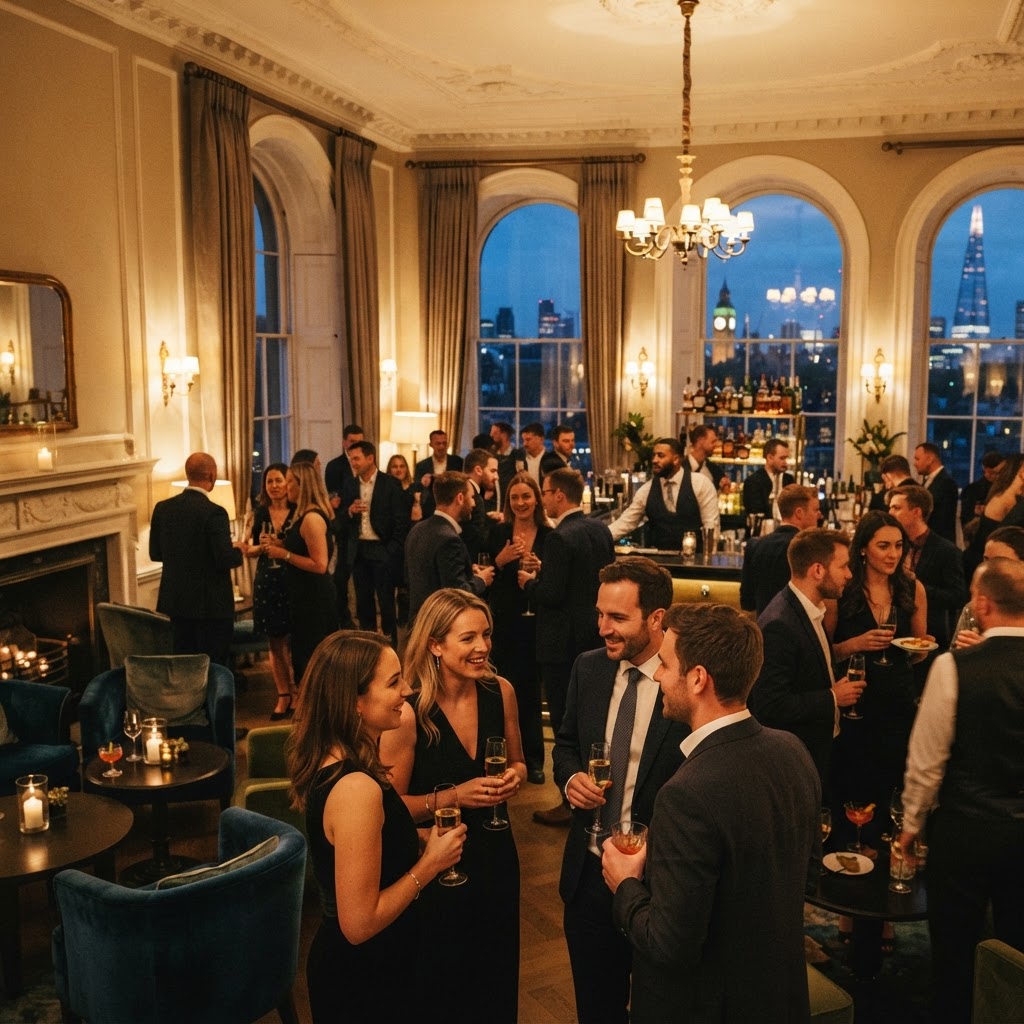
The venue isn't the event. It's the stage on which every conversation, connection and opportunity unfolds.
London has no shortage of extraordinary venues. Spend an afternoon searching online and you'll find rooftop terraces overlooking St Paul's, elegant Georgian townhouses tucked away behind quiet streets in Mayfair, converted warehouses in Shoreditch, historic halls that have witnessed centuries of conversation and contemporary spaces designed with every piece of technology imaginable. On paper, choosing a corporate event venue in London should be one of the easiest parts of planning an event. After all, with so much choice, surely the perfect venue is simply a matter of finding one that fits your guest numbers, your budget and your preferred postcode.
In reality, that's often where people go wrong.
Somewhere along the way, venue finding became an exercise in comparison. We ask how many people a space can accommodate, whether it has the latest AV equipment, how close it is to the nearest station and whether the catering looks good in the brochure. They're sensible questions and every one of them deserves an answer, but they're rarely the questions that determine whether an event creates lasting value. Guests don't leave talking about the ceiling height or the square footage of the reception area. Months later, what they remember is how they felt, who they met and the conversations they had. The venue simply created the conditions for those things to happen.
That's why we never begin with the venue.
We begin with the outcome.
Before we've opened a single venue brochure or arranged a site visit, we want to understand what success actually looks like. Is this an evening designed to strengthen relationships with existing clients? Is it about bringing together people who've never met before? Is it a leadership event where honest conversations need space to happen, or is it a celebration where people should leave feeling genuinely appreciated? The answer changes everything because once you're clear about what the event is trying to achieve, the venue becomes far easier to recognise.
A beautiful room isn't always the right room
Some of the most impressive spaces in London can feel surprisingly cold when the objective is intimacy. Equally, some of the city's smaller, understated venues create an atmosphere where conversations seem to flow naturally because nobody feels overwhelmed by the environment. It's a little like choosing the setting for a film. The backdrop matters enormously, but only if it helps tell the story. If it distracts from it, then however beautiful it may be, it has become the wrong choice.
One of the moments we think about most isn't the keynote or the dinner. It's the first sixty seconds after a guest walks through the door. Those moments pass almost unnoticed by the organiser, who's understandably focused on timings and logistics, but they're often the moments that shape the rest of the evening for the guest. Is someone there to greet them warmly? Is it immediately obvious where they should go? Does the room feel inviting or intimidating? If they've arrived alone, does someone naturally help them settle into the space before they're left holding a drink wondering whether to interrupt a conversation?
We've all been that guest at some point.
The one standing quietly on the edge of the room, pretending to check a phone while everyone else appears completely at ease. It only lasts a minute or two, but it can change how someone experiences the entire event. That's why we believe the arrival experience deserves just as much attention as the closing speech. If people feel comfortable from the beginning, everything that follows becomes easier. Conversations happen more naturally, introductions feel less forced and the room begins to develop the atmosphere every organiser hopes for but can't simply buy.
Atmosphere is built on small decisions
Atmosphere is a fascinating thing because it rarely comes from the features people notice first. It's created by dozens of small decisions that most guests will never consciously recognise. Lighting that softens the room rather than making it feel clinical. Music that fills the silence without competing with conversation. Seating that encourages people to linger rather than move on after five minutes. Even the placement of a coffee station or drinks reception can subtly influence how guests interact with one another. None of these decisions are particularly dramatic on their own, but together they shape how a room feels, and people remember feelings long after they've forgotten details.
The people working in the venue matter just as much as the venue itself. We've worked with spectacular spaces where the service never quite matched the surroundings, and we've worked with understated venues where the hospitality elevated the entire experience. The difference is almost impossible to quantify, yet everyone notices it. The best teams have an extraordinary ability to anticipate what guests need before anyone has to ask. They solve problems quietly, welcome people genuinely and create an environment where everything simply feels effortless. When hospitality is done well, nobody talks about it afterwards because it becomes invisible. Guests simply leave believing the whole evening ran beautifully.
The same philosophy extends to the practical details that most people never see. Access for suppliers, loading schedules, flexibility if timings shift, contingency plans for unpredictable British weather and the willingness of a venue team to solve problems collaboratively all influence the guest experience far more than many organisers realise. These are rarely the details featured in glossy brochures, yet they're often the reason one event feels seamless while another constantly feels as though it's recovering from the next challenge.
Don't fall in love with photographs
Perhaps that's why we encourage clients not to fall in love with photographs. London is full of venues that look spectacular through a camera lens, but an event is never experienced through a camera. It's experienced through people. Through conversations over dinner, introductions made over coffee, ideas exchanged between strangers who happened to be standing next to each other at the bar. Those moments don't happen because a room is beautiful. They happen because the environment quietly encouraged them to.
When we recommend a venue, we're rarely recommending a building. We're recommending a feeling. We're recommending a place where people are likely to stay longer than they intended because the conversation is too interesting to leave, where clients feel genuinely looked after and where your team can focus on building relationships instead of worrying about logistics. Those are the venues that create value long after the tables have been cleared away.
The truth is that choosing a corporate event venue in London has very little to do with London itself. The city provides remarkable spaces, but remarkable spaces alone don't create remarkable events. People do. The venue simply gives those people somewhere to meet, somewhere to talk and somewhere to remember.
Years later, your guests probably won't remember the architecture, the lighting design or whether the reception was held on the third floor or the fourth. They'll remember the conversation that sparked a new partnership, the client who became a friend or the colleague they finally had time to get to know. If the venue helped make those moments possible, then it was exactly the right choice.
Because the very best venues don't steal the spotlight.
They quietly make sure the people in it do.