Corporate Events Agency UK: Why Great Events Beat Logistics
If you ask someone to remember the best corporate event they've ever attended, it's unlikely they'll begin by describing the venue.
They probably won't tell you about the registration desk, the lighting specification or whether the stage was eight metres wide instead of six. Those details matter, of course, but they rarely become the story people take home.
Instead, they'll remember the conversation that led to a new opportunity. They'll remember meeting someone they'd admired for years, finally putting a face to a name after months of video calls or leaving the room with a completely different perspective than when they arrived. They might remember feeling genuinely appreciated by their employer or inspired by a speaker whose words stayed with them long after the event had ended.
It's easy to think that those moments happen naturally, but they don't.
They're designed.
That's the difference between simply organising an event and working with a corporate events agency UK that understands how every decision influences the experience your guests will have.
At Hi Events, we've always believed that the event itself is only part of the story. What matters far more is what happens because of it. The relationships that grow stronger. The conversations that continue long after everyone has travelled home. The confidence your clients have in your business because every detail reflected the standards you hold yourselves to every day.
That's why we don't begin with venues or catering.
We begin with one simple question.
What do you want people to feel when they leave?
The answer to that question quietly shapes everything else.
Why Work With a Corporate Events Agency?
There comes a point where planning an event becomes about much more than creating a schedule and booking suppliers. Whether you partner with an event agency UK or build an in-house team, the same truth applies. Every decision starts to affect another.
The venue influences the atmosphere. The atmosphere changes the way people interact. The food affects the energy in the room. The timing of the agenda determines whether guests have enough space to build meaningful relationships or simply move from one presentation to the next.
It's a surprisingly complex puzzle.
An experienced corporate event planning agency understands how those individual pieces fit together because they've spent years solving them. That depth of corporate event planning brings clarity to priorities, keeping the focus on outcomes rather than tasks. Rather than managing dozens of separate suppliers yourself, you're working with one team that already understands how to coordinate every moving part while keeping your objectives firmly in sight.
That doesn't simply save time.
It gives you the freedom to be present.
Too often, organisers spend their own event worrying about microphones, deliveries, dietary requirements or whether the keynote speaker has arrived. They become spectators to something they should have been enjoying alongside their guests. Great event management allows you to step away from the operational detail and focus on the people in the room instead.
After all, that's why you're hosting the event in the first place.
Professional Event Services Should Feel Invisible
One of the biggest misconceptions about professional event services and broader corporate event services is that success is measured by how much people notice.
In reality, it's usually the opposite.
Think about the best restaurant you've ever visited. You probably weren't constantly aware of the service.
Glasses were quietly refilled. Plates arrived at exactly the right moment. Staff anticipated what you needed before you'd even thought to ask.
The same principle applies to corporate events.
Exceptional event management services shouldn't feel complicated.
Guests shouldn't notice how carefully arrivals were staggered to avoid queues or how production teams worked behind the scenes to ensure every presentation ran flawlessly. They won't see the contingency planning, supplier coordination or months of preparation that made everything appear effortless.
They'll simply leave saying, "That was one of the best events I've attended."
Ironically, that's often the greatest compliment an event planner can receive.
Every Event Begins With Strategy
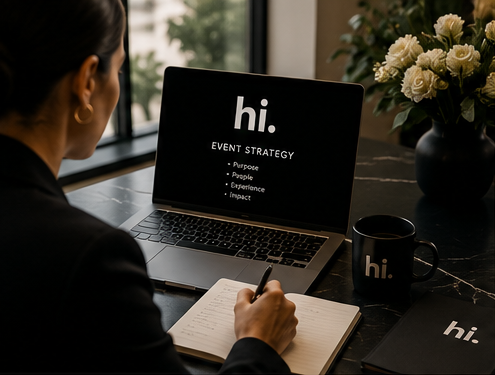
One of the reasons businesses choose an experienced event planning agency is because planning doesn't begin with logistics.
It begins with purpose.
From there, we shape tailored corporate event solutions that align with your goals.
Before we discuss venues, entertainment or production, we want to understand why the event exists.
Are you launching a new product? Strengthening relationships with key clients? Celebrating exceptional performance? Bringing colleagues together after months of remote working? Building your employer brand?
Every objective creates a completely different event.
A product launch needs excitement and momentum. A leadership retreat requires space for honest conversations. A conference should leave delegates feeling inspired rather than overwhelmed. A client dinner should feel intimate enough for relationships to deepen naturally.
The strategy comes first.
Everything else supports it.
Corporate Events Come in Many Forms
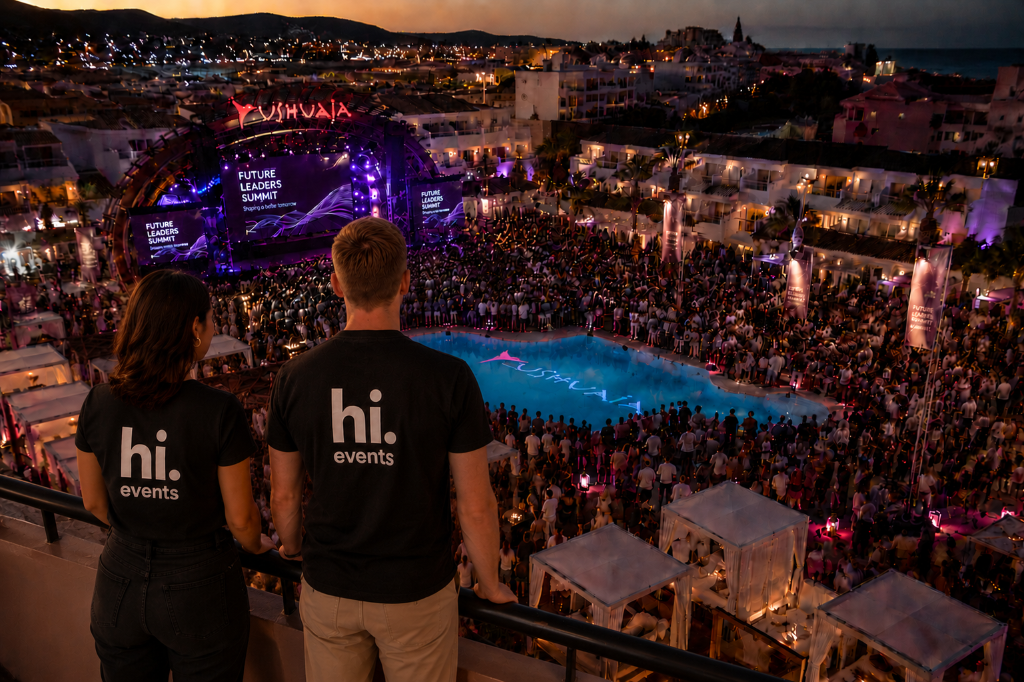
The phrase corporate event covers an extraordinary range of experiences across UK corporate events, each designed to achieve something slightly different.
For some organisations, it's a large-scale conference bringing together hundreds of delegates to share industry insight and future strategy.
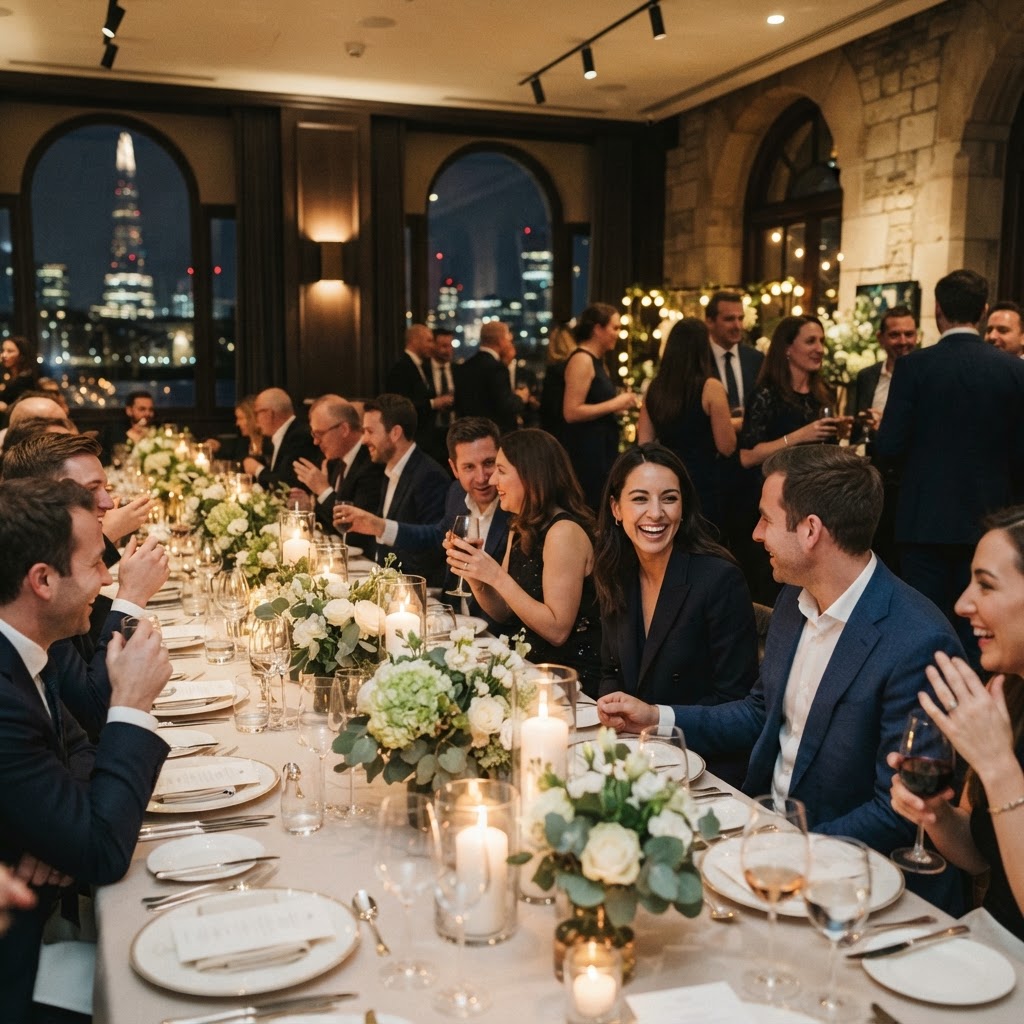
For others, it's an elegant gala dinner celebrating achievements or recognising outstanding contributions across the business.
Some events revolve around product launches, creating excitement around innovation and giving clients an experience they'll associate with the brand long after launch day.
Others focus on team building, not through awkward icebreakers, but by creating shared experiences that strengthen trust and encourage people to see each other differently.
Networking events have their own purpose entirely.
Done well, they remove the awkwardness from networking altogether. They create environments where conversations begin naturally because people feel comfortable enough to be themselves rather than feeling as though they need to impress everyone they meet.
Whatever the format, the objective remains remarkably similar.
Bring people together. Help them connect. Give them something worth remembering.
Choosing the Right Venue
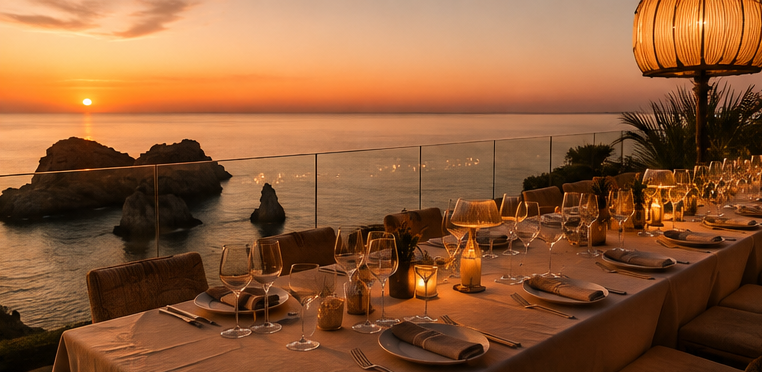
London alone offers hundreds of exceptional venues, from historic private dining rooms and rooftop terraces to contemporary event spaces overlooking the city skyline.
Choosing between them isn't about finding the most impressive building.
It's about finding the environment that supports the outcome you're trying to create.
Some spaces naturally encourage conversation. Others inspire creativity. Some create a sense of occasion from the moment guests arrive.
The best venue isn't necessarily the most expensive or the most fashionable.
It's the one where your guests feel relaxed enough to engage with the people around them.
Because that's where the value of any corporate event is created.
Not on the stage.
In the room.
Trends Change. Human Connection Doesn't.
Every year brings new trends to the events industry.
Hybrid events. Artificial intelligence. Immersive technology. Sustainability. Personalisation.
All of them have their place, and we embrace innovation where it genuinely improves the guest experience.
But technology should never become the experience itself.
People don't attend corporate events because they want to see impressive technology.
They attend because they want to learn something, strengthen relationships, celebrate success or simply spend meaningful time with other people.
The most successful events use technology to enhance human connection, never replace it.
That's a distinction we believe will only become more important in the years ahead.
Why Experience Matters
There are thousands of suppliers capable of organising an event.
Far fewer understand why events matter in the first place.
Experience isn't just knowing which venue has the best audiovisual equipment or which caterer serves exceptional food, although those things are important.
Experience is recognising the subtle moments that guests remember without ever realising why.
It's noticing when a room feels too formal. Knowing when dinner service is taking slightly too long. Understanding that introducing two people at exactly the right moment could become the most valuable outcome of the entire evening.
Those observations don't appear on project plans.
They're learnt by spending years watching people interact.
And they're often what separates a good event from one people continue talking about months later.
What Happens After the Event Matters Most
Perhaps this is where Hi Events sees things slightly differently.
Many agencies measure success by what happened on the day.
We measure success by what happens afterwards.
Did your clients call you the following week? Did your team feel more connected? Did the conversations continue? Did the event create opportunities that simply wouldn't have existed otherwise?
Because if the room looked beautiful but nothing changed afterwards, was the event really successful?
For us, the answer is no.
The most valuable events don't finish when the last guest leaves.
That's where their real impact begins.
More Than an Event
Choosing a corporate events agency in the UK - or an event agency UK - isn't really about outsourcing logistics.
It's about finding a partner who understands people.
Someone who recognises that every venue, every menu, every conversation space and every carefully considered detail contributes to something much bigger than a schedule.
At Hi Events, we believe exceptional events are built around human connection. We design experiences that help businesses strengthen relationships, inspire teams and create opportunities that continue long after the lights have been switched off and the final table has been cleared away.
Because in the end, people rarely remember the event itself.
They remember how it made them feel.
And that's what great event planning has always been about.
Frequently Asked Questions
Why work with a corporate events agency instead of managing everything in-house?
Because events are an interconnected puzzle where every choice influences the guest experience. An experienced agency coordinates venues, suppliers, production, timing, and guest flow around your objectives, so priorities stay clear and outcomes drive decisions. That doesn't just save time - it frees you to be present with your guests instead of troubleshooting microphones, deliveries, or schedules on the day.
You say planning starts with "What do you want people to feel?" How does that change the event?
Defining the desired feeling sets the strategy, which then shapes everything else - format, agenda, pace, food, production, and space. Different objectives create different events: product launches need momentum; leadership retreats need room for honest conversation; conferences should inspire rather than overwhelm; client dinners should enable natural, intimate relationship-building. When feeling leads, logistics align to support it.
What does it mean that professional event services should feel "invisible"?
Like great restaurant service, the best event management is noticed most by its absence. Guests don't see staggered arrivals, seamless AV cues, supplier coordination, or contingency planning - they just experience flow. Success isn't measured by how complicated it looked, but by guests leaving saying, "That was one of the best events I've attended."
What role should technology and trends play in corporate events?
Use them to enhance human connection, not replace it. Hybrid formats, AI, immersive tech, sustainability, and personalisation all have value when they improve the guest experience and support your purpose. People attend to learn, build relationships, and celebrate - technology should make those moments easier and richer, never become the point of the event.
How do you measure whether an event was truly successful?
By what happens afterwards. Did clients call the following week? Did teams feel more connected? Did conversations continue and new opportunities emerge? A beautiful room without lasting impact misses the mark - the most valuable events spark outcomes that start when the last guest leaves.