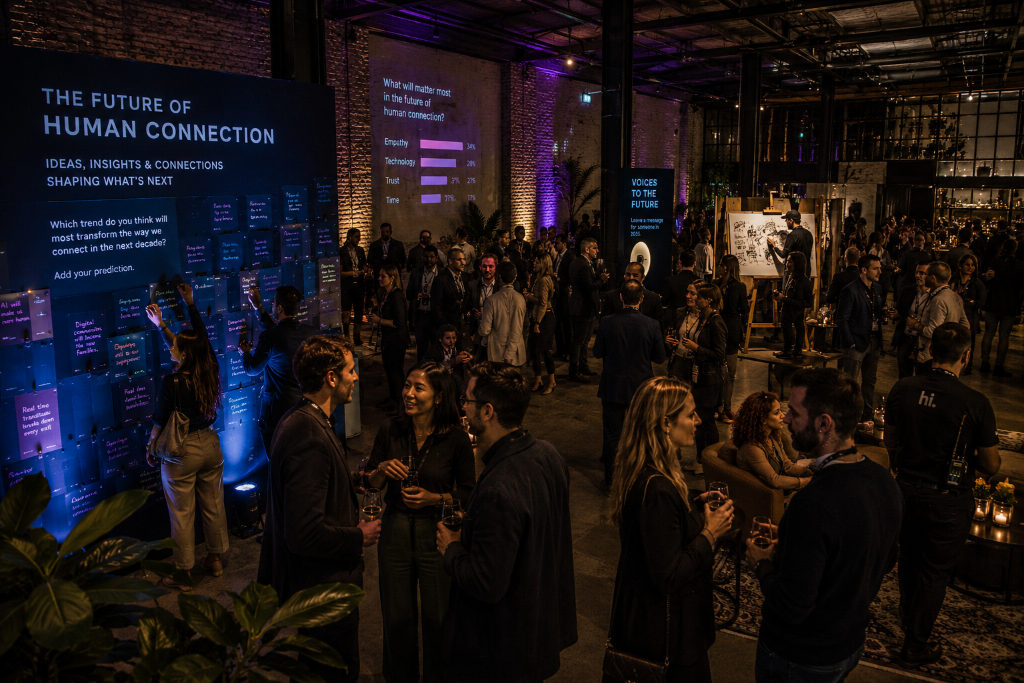
Most networking events fail because they're designed to network
The best networking events don't feel like networking events. They feel like environments where the right conversations happen naturally - because someone designed the conditions for them.
Networking events have a reputation problem. The word itself triggers resistance - the forced interaction, the exchanged business cards, the awkward small talk with strangers. Yet networking remains one of the most valuable things an organisation can facilitate for its people, clients and partners. The problem isn't the concept. It's the execution. Most networking events fail because they're designed to network - to facilitate interaction - rather than to create the conditions where genuine connection happens naturally.
Why Most Networking Events Fail
Most networking events fail for a simple reason: they treat connection as something that can be forced. Name badges are printed, introductions are facilitated, ice-breakers are scheduled - and the result is an event that feels transactional, social rather than commercial, and memorable for all the wrong reasons.
The assumption behind forced networking is that if you put enough people in a room and give them name badges, they'll connect. But connection doesn't work that way. People connect when they feel comfortable, when the environment supports natural conversation, when they're introduced to the right people rather than anyone, and when the atmosphere encourages genuine exchange rather than transactional exchange.
The networking events that succeed - the ones that produce real relationships, commercial conversations and lasting value - are designed differently. They don't try to force connection. They create the conditions where connection happens on its own.
Connection can't be forced. It can only be designed for.
Designing for Natural Connection
Strategic networking event design begins with the guest list. Not how many people, but which people. Relationship mapping - analysing who should meet whom, identifying natural synergies, planning strategic introductions - is the foundation of effective networking. When the right people are in the room, connection happens without facilitation.
The environment matters just as much. A room that's too bright or too loud discourages conversation. A layout that forces people past each other without stopping prevents interaction. A space that feels corporate or transactional makes people guarded. The right environment - warm lighting, comfortable seating, natural linger points, acoustics that allow talking without shouting - creates the conditions where conversation flows naturally.
The pacing matters too. An event that packs every minute with activity leaves no room for the unplanned connections that often become the most valuable part of the evening. An event that builds in space - generous breaks, comfortable lounge areas, natural moments for pause - gives those connections room to breathe. The best networking events feel effortless because someone thought about every detail that could get in the way.
Relationship Events vs. Networking Events
There's a meaningful difference between a networking event and a relationship event. A networking event is designed for breadth - many people, many connections, many exchanged cards. A relationship event is designed for depth - the right people, meaningful conversation, lasting connection. Both have their place, but the most valuable corporate events tend to be relationship events rather than networking events.
A relationship event is curated with intention. The guest list is selected around outcomes - who needs to meet whom, what conversations should happen, what relationships should deepen. The format is designed to support those outcomes - whether that's a hosted dinner, an intimate reception, or a structured gathering with curated introductions. The follow-up strategy ensures that the conversations started during the event continue afterwards.
This is the approach we take to networking events. We don't design for interaction. We design for connection. We start with relationship mapping, curate the guest list around outcomes, design the environment for natural conversation, and ensure that the value of the event extends well beyond the evening itself.
We don't design for interaction. We design for connection.
What Designed Networking Creates
When networking events are designed strategically - with the right guests, the right environment and the right follow-up - the outcomes are transformative. Genuine relationships form. Commercial conversations open in environments that feel social rather than transactional. Introductions lead to partnerships. The event becomes the beginning of something rather than a standalone occasion.
These outcomes don't show up on the night. They unfold in the weeks that follow - in the client who calls, the introduction that leads to a conversation, the relationship that deepened so quietly nobody noticed it happening. That's the real return on investment in a well-designed networking event, and it's why treating networking as a logistical exercise rather than a strategic one is such a costly mistake.
The choice is simple: put people in a room and hope they connect, or design an environment where connection happens naturally. The first gives you a room full of people who attended. The second gives you relationships, trust and commercial momentum that unfold for months afterwards.
Essays that explore this further.
Related cornerstone topics.
If this resonates, let's talk.
We help organisations design events around the relationships and outcomes that matter.