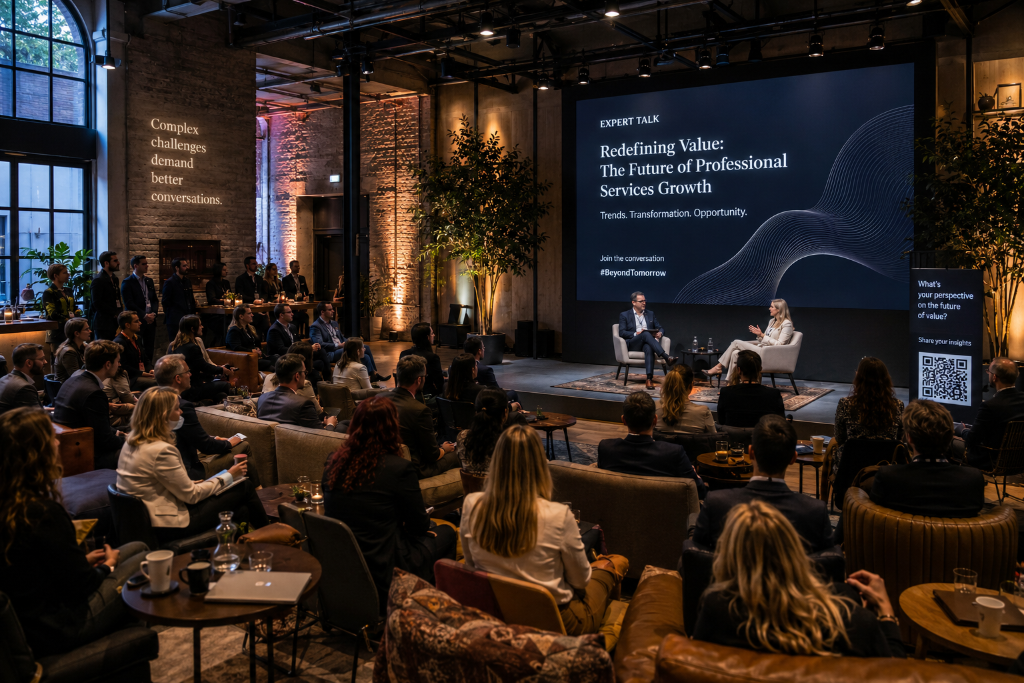
Event management is the easy part. Strategy is what's hard.
Anyone can book a venue and send invitations. The real work of an event management company happens before the event is announced - and after the last guest leaves.
Event management is widely misunderstood. Most people see it as logistics: finding venues, coordinating suppliers, managing timelines, ensuring the catering arrives on time. And yes, that's part of it. But logistics are the visible layer - the part anyone can do. The part that actually determines whether an event succeeds is invisible. It's the strategy that shapes the event before it's announced, and the follow-up that extends its value long after the last guest departs.
What People Think Event Management Is
Ask most people what an event management company does, and they'll describe the logistics. Booking the venue, arranging the catering, coordinating the AV, managing registrations, sending invitations, overseeing the setup. These are the tasks that are visible, tangible and easy to understand - and they're also the tasks that, done well, should be completely invisible to your guests.
The problem with defining event management purely as logistics is that it reduces the entire discipline to execution. It treats the event as a project to be managed rather than an outcome to be created. And when the focus is entirely on execution, the most important questions - why are we doing this, who needs to be in the room, what should be different afterwards - never get asked.
A good event management company handles logistics flawlessly. A great one recognises that logistics are the baseline, not the destination.
What Event Management Actually Involves
Strategic event management begins long before a venue is considered. It starts with understanding the objective: what should this event achieve, who is it for, and what does success look like? From there, every decision - format, audience, environment, content, pacing, hospitality - is shaped around that purpose.
During the event itself, event management means making the complex feel effortless. It means coordinating production, catering, registration, technology and guest experience so seamlessly that guests never notice the machinery behind the scenes. It means having contingency plans for every scenario, briefing teams on every detail, and ensuring that when something unexpected happens - and it always does - someone has already thought about it and has a solution ready.
After the event, strategic event management means measuring what mattered rather than what was easy to count. Who followed up. What conversations continued. What changed in the weeks that followed. The logistics end when the event ends. The value doesn't.
Logistics are the baseline, not the destination.
How Hi Events Manages Events Differently
We approach event management as a strategic partnership, not a transactional service. That means we start with the why, not the where. We challenge assumptions, suggest formats that might not have been considered, curate guest lists around outcomes and design environments where genuine connection happens naturally.
We also manage every operational detail - venue sourcing, production, catering, logistics, registration, technology, on-site coordination - with a level of precision that comes from years of experience across corporate events, conferences, executive retreats and destination events. Our team includes event strategists, creative directors, production technicians and project managers, each bringing a different discipline to the same purpose.
Whether we're managing an intimate executive dinner or a multi-day international conference, the approach is the same: understand the outcome, design the experience, manage every detail, and measure what matters.
What Strategic Event Management Creates
When event management is treated as a strategic discipline rather than a logistical exercise, the results speak for themselves. Events create relationships rather than attendance. Conferences build authority rather than filling seats. Client hospitality opens commercial conversations rather than simply impressing people.
The outcomes of well-managed events unfold over time - in the client who calls with a question they wouldn't have thought to ask, the introduction that leads to a partnership, the employee who mentions the offsite three months later as the moment things started to click. These are the signals that tell you the event management was worth it.
That's the difference between event management as a service and event management as a strategy. The first gives you a well-run event. The second gives you outcomes that last.
Essays that explore this further.
Related cornerstone topics.
If this resonates, let's talk.
We help organisations design events around the relationships and outcomes that matter.